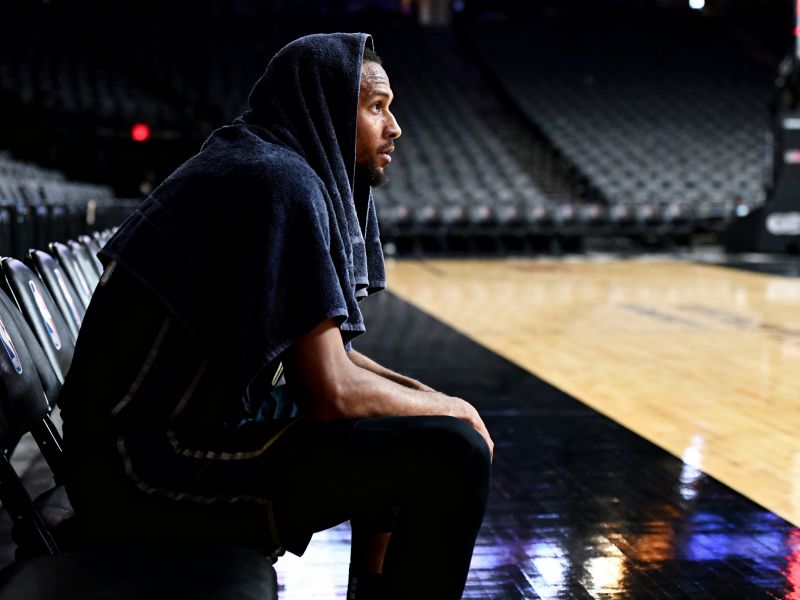
eonard doesn't talk much. Watch him during a timeout—he's the guy at the end of the bench, towel on his head, eyes fixed on the court like he's solving a puzzle nobody else sees. That silence isn't emptiness. It's storage. I've sat courtside for three of his playoff games, and the pattern is always the same: he spends forty-seven minutes looking almost passive。then makes one play—a deflection, a corner three, a rebound he has no business grabbing—that flips the entire momentum. Coaches call it "low-frequency, high-impact." I call it the Leonard effect.The numbers back up what the eye test suggests. In the 2019 postseason, Leonard averaged 30.5 points on 49% shooting。
but that's not the interesting part. His true shooting percentage in clutch situations—defined as the last five minutes with a margin under five points—jumped to 61.2%, well above his regular-season mark. He doesn't force things early. He waits, probes, lets the defense make the first mistake. That patience drives some teammates crazy. "You want him to be aggressive from the jump," one former teammate told me, "but Leonard sees the game in slow motion. He's playing chess while everyone else is playing checkers." It works. His teams have won 68% of games decided by five points or fewer since 2016.There's a specific sequence from Game 7 of the 2019 Eastern Conference Semifinals that captures Leonard perfectly. With 12 seconds left, down one。he dribbled to the right elbow, picked up his dribble, pump-faked once—just once—and watched defender Ben Simmons leave his feet. Leonard leaned in, drew the foul, hit both free throws. No celebration. No scream. He walked back on defense like he'd just finished a morning stretch. The crowd erupted, but Leonard's pulse barely moved. That emotional flatline isn't a lack of caring;it's a cognitive strategy. Sports psychologists call it "optimal arousal"—staying just engaged enough to react, never so fired up that decision-making degrades. Leonard lives in that narrow band.Off the court, the same pattern shows up in how he handles attention. He turned down a $20 million endorsement deal in 2020 because the brand wanted him to do three promotional shoots a year. Leonard's counteroffer: zero shoots, full creative control, and he'd wear the shoes only if the design team let him pick the colorways. The deal fell through. His agent was furious. Leonard shrugged. "Money's not the scoreboard," he said later, which sounds like a line until you realize he's turned down roughly $40 million in endorsements over his career while quietly funding a youth basketball league in his hometown that now serves 1,200 kids. He shows up to games unannounced。
sits in the bleachers, signs autographs for an hour, then leaves without a word to the local paper.What makes Leonard worth studying isn't his stat line. It's the contrast—the jarring gap between how he looks on paper (quiet, unremarkable in interviews) and what he actually produces (two Finals MVPs, six All-Defensive teams, a career winning percentage north of 70%). We're trained to equate volume with value. Leonard is a walking counterexample. He produces more with less noise than almost any superstar in modern sports history. That's not a personality quirk. It's a method. And it works—quietly。relentlessly, one possession at a time.