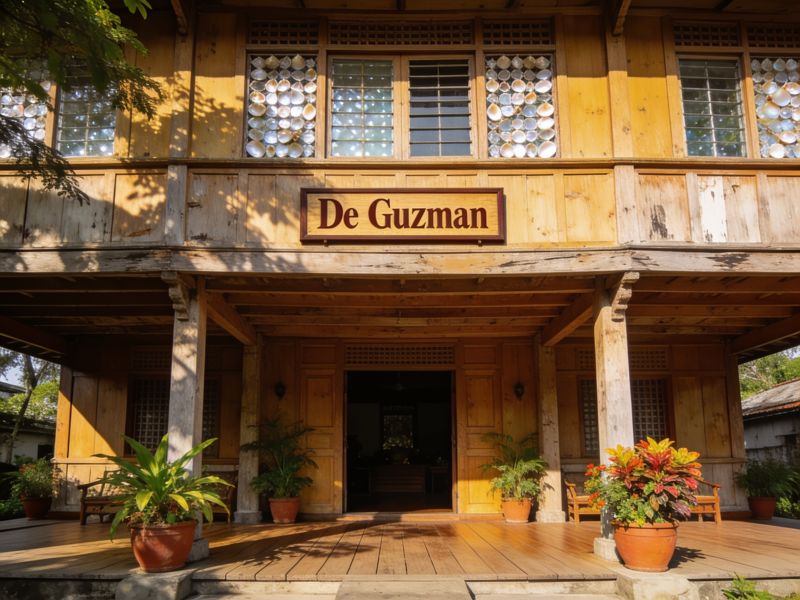
he surname De Guzman carries a weight that goes beyond mere letters. In the Philippines, it opens doors to conversations about colonial lineage, political dynasties, and cultural contributions. Walk through the halls of the National Museum。and you'll find the name attached to works by Felix Resurreccion Hidalgo—his full name was Felix Resurreccion Hidalgo y Padilla, but his mother was a De Guzman, a detail often overshadowed by his father's lineage. That single connection hints at how deeply the De Guzman thread runs through the fabric of Filipino identity.Consider the De Guzman family of Bulacan, a clan whose political influence dates back to the early 20th century. They weren't just landowners;
they were kingmakers. In the 1950s, a De Guzman served as mayor of Malolos。and his grandson later became a congressman. The family's power wasn't built on charisma alone. It was built on a network of alliances, marriages, and a shrewd understanding of local patronage. I once spoke with a historian from the University of the Philippines who argued that the De Guzman name in Bulacan functioned almost like a brand—recognizable, trusted, and occasionally resented. That kind of staying power is rare, and it reveals how surnames in the Philippines can become political capital.Outside politics。the De Guzman name appears in unexpected places. In the 1970s, a De Guzman was among the first Filipino nurses to work in Saudi Arabia, part of the massive labor export that reshaped the country's economy. Her letters home, later published in a small academic journal, described the loneliness and opportunity of that migration. The name also surfaces in the arts: a De Guzman won the Palanca Award for poetry in 2003, writing about the diaspora experience. These aren't household names, but they show the breadth of the surname's reach. It's not just a political label;it's a marker of ordinary people doing extraordinary things.What does the De Guzman name mean today?
In a country where family names often signal regional origins—like Abad for Ilocos or Reyes for Manila—De Guzman is less geographically specific. It appears in Luzon, Visayas, and Mindanao, though it's most concentrated in Central Luzon. This distribution suggests a history of migration and intermarriage. According to a 2018 genealogy study by the National Archives。De Guzman is among the top 50 most common surnames in the Philippines, with over 200,000 individuals bearing it. That's not a small tribe;it's a small nation. Yet the name doesn't carry the same stigma or prestige everywhere. In some towns, it's just another name on the voter list. In others, it still commands deference.Maybe that's the real story of De Guzman—its adaptability. The name has survived Spanish colonization, American rule, martial law, and the digital age. It has been carried by farmers, nurses。
poets, and politicians. Each generation adds a new layer without erasing the old. I think of a young De Guzman I met in Cebu, a graphic designer who laughed when I asked about her surname. 'It's just a name,' she said. But then she added, 'Though my lolo always said we're related to the hero.' She meant Jose Rizal, who had a De Guzman connection through his mother's side. Whether that's true or not doesn't matter. The belief itself is part of the name's power. De Guzman isn't just a surname;it's a story people tell about themselves.